
Scandinavian film
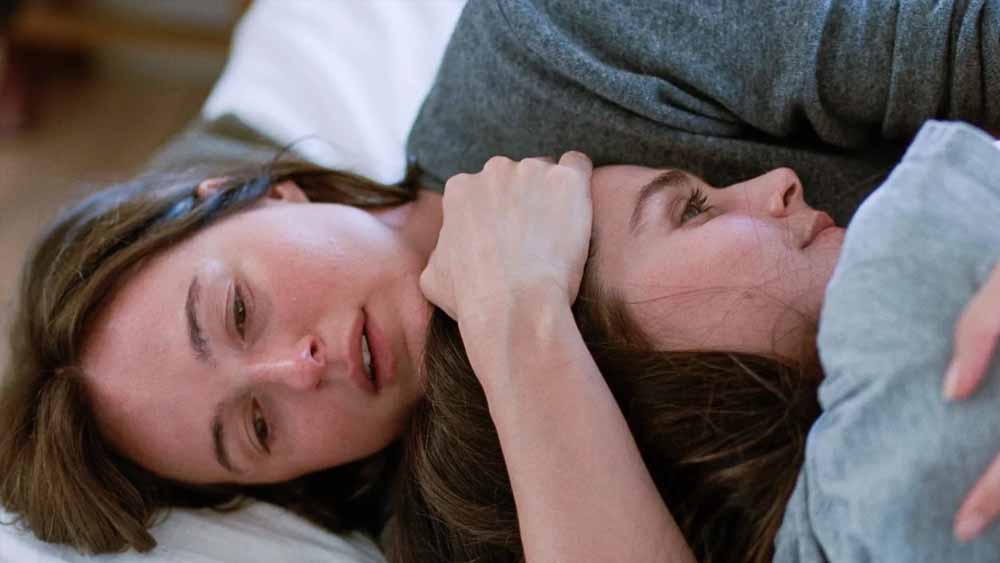
For the last couple years I’ve watched a lot of films. At first I was trying to find more suspenseful Hitchcockian flicks which I love. Having uncovered a few great ones my mindset evolved to “what else have I missed?” And once in a while I’d encounter a film that was listed only as a drama and I'd think it would be boring and sullen. And many probably are. But some of my very favorite discoveries have been mere dramas. Portrait of a Lady on Fire, Perfect Days, and now Sentimental Value. It’s subtle, knowing exactly how to engage its audience by trusting it. I was moved in a way that is rare, and which I treasure. I’ll be checking out more from director Joachim Trier, writer Eskil Vogt, and actor Renate Reinsve, whose performance was sublime.
Babette's Feast is a 1987 drama about a small community in 19th-century Denmark. I chose it as a cozy watch, and it delivered. It's often talked about as a food movie, so I didn't realize how steeped in religion it would be. It makes light of the disciples of a strict and charismatic religious leader who controls his community long after his death, but it also dignifies their struggle with the sort of religious thought that I find intellectually lacking; that repression is the same as expression, that to drudge is to exult. It left me with mixed feelings.
Ordet is a 1955 drama from Denmark with sophisticated cinematography. The director employs long takes with carefully planned compositions and camera movements, but which also endow the actors with incredible responsibility to hit their marks, which they do! Like Babette's Feast, it is about a small and religious community. Both films feature a performance by Birgitte Federspiel. I very much enjoyed the watch, but with this film, like Babette, it's the religious ideas that I'm critical of, and which undercut the film.
If you're a Christian you may enjoy this movie, and if you haven't seen it, I suggest you stop reading now, because I'm going to spoil it so I can levy my critique. Okay, here we go. The film wonderfully depicts various religious postures, and also the destructive sectarianism particularly so to Christianity. Additionally, to its credit, for a time, is how it presents life's seemingly arbitrary difficulties, including madness and death. I really felt for the patriarch, Morten, as everything crumbled around him, and he hung by the barest thread of his faith. How human is that? I wept. But then his beloved daughter-in-law is resurrected by his son, who, it turns out is not mentally ill with a savior complex, but who indeed wields the miraculous powers of Jesus. Christianity is proven real. It ceases to be a drama about what life can really be like, and therefore becomes quite literally a fantasy.
But Nick, you love It’s a Wonderful Life; what’s the difference? I’ll tell you. That film, to me, uses pop Christian symbols to channel Capra’s optimism into a story relatable to his audience. Ordet, on the other hand, starts with a realistic picture of Christianity and must inject into it a hope that feels untrue. It’s a Wonderful Life starts as a fantasy, asking the audience to suspend disbelief for the ride. Ordet presents a harsh world which is, at the last minute, saved by divine intervention; deus ex machina. Oh, okay.
Carl Th. Dreyer: My Metier is a documentary about the Danish filmmaker responsible for Ordet. This was a ‘homework’ watch for me, my selection for the Criterion Challenge 2026’s category “The Twenty Least Watched Films”. And what a category that is, woof! I learned that Dreyer was an unassuming looking guy, and as a director he was meticulous, calm, and stubborn. Perhaps a bit like David Fincher.
Coppola and Dunst
The Virgin Suicides is the feature directorial debut of Sophia Coppola, and what an announcement of her talent. It hasn’t been on my watchlist for long, but if I’d ever heard of it before, I’m sure the title gave me pause; I figured this would be heavy and morose. I was glad to find that it’s not one-dimensional. It’s actually quite round, with lots of lightness and style. Kirsten Dunst is captivating as the mysterious Lux Lisbon.
Marie Antoinette is an opulent historical drama by Coppola and starring Dunst. Filled with sumptuous settings, court gossip, and over-the-stop style, this one is a great hang, of course, until it isn’t.
Modern Sci-Fi
Project Hail Mary is a warm and visually delightful sci-fi adventure movie starring Ryan Gosling. Because it’s directed by Lord and Miller it’s also a comedy. I found it fun and funny, and would recommend it, but personally a few things brought the experience down for me. Some of the sentimentality was perfect, but then it just kept hitting that same note in a way that cheapened it. It also felt disingenuous—calculated to please a wide audience—with earnestness that is only pretend, which is self-defeating. Tonally, it felt odd; it wants to play straight the science and technology, but it also wants non-stop comedy including broad physical humor. It also feels too long by the end. I’m glad it got made though, and may show it to my kids some time.
Resurrection is an enigmatic Chinese art piece by Bi Gan. The name and cover alone sold me on viewing it. But then I found the first act difficult. I almost turned it off. From the fourth act on I increasingly enjoyed the film, my appreciation crescendoing in the stunning fifth act. The film is a visual marvel, and it certainly has themes, but I found it disjointed. I wonder if it smooths out, and deepens on further viewings, but I worry that it doesn’t. Maybe it’s pulling a David Lynch, baiting us with compelling themes and images, but being inscrutable—not because inscrutability is the message—but because the artist ultimately doesn’t have something interesting to say, or is unable to communicate it.
Back to the Future
Back to the Future Part II, compared the original film, is not as fine-tuned. Something's a little off with the story, the editing, the cinematography, and the performances. But it's great fun, and the way its plot is interwoven with that of the first film is incredibly conceived. On this rewatch, my first in decades, the performance of Thomas F. Wilson really stood out. He plays four versions of Biff, plus Griff, giving each role an uncanny twist on the others.
Back to the Future Part III stands out in the series due to its old west setting. I think when I was younger it was my least favorite of the trilogy, but now I think it might edge out Part II. Of course, the two films were designed together, so they can’t be entirely separated. But the third installment is funny, has a lot of heart, and resolves some of the central themes these movies deal with. It’s a joy.
NYC anxiety spirals
Uncut Gems is an astonishing crime triller from the Safdie Brothers. After loving Josh Safdie's Marty Supreme, I wanted to circle back for this film. It has a similar frenetic energy, New York City setting, and lead character, this time played brilliantly and against type by Adam Sandler. The rest of the cast is great as well. It's flourished with a unique score, a Billy Joel needle drop, and visionary title sequence. And it's so painful to watch.
After Hours is maybe the quintessential ‘one crazy night’ movie. Anxiety and dark humor swirl together in this fun misadventure from Martin Scorsese.
Charlie Chaplin
Modern Times is a classic 1936 Charlie Chaplin film. It renders the modern, industrialized world with big, crazy machines that can gobble you up. You’ll just as soon get fired as you will get hired, and the cops are always ready to toss you in the paddy wagon for being in the wrong place at the wrong time. Paulette Goddard shines, and of course, Chaplin does too. Part of his genius was to marry slapstick with immense pathos. You feel for the little guys and gals trapped in a broken system, with a soup spilled down their shirt and a pie smashed in their face. As social commentary, Modern Times is timeless.
The Kid is cute. The movie, and of course, the child actor. It is perhaps not my favorite Chaplain, but it did make me laugh freely and simply.
Noir
Key Largo is John Huston directed post-war crime/noir film with a unique setting, the humid and stormy Florida Keys. Now I'm 2 for 4 on Bogey/Bacall pictures. Gotta catch 'em all! It also features Edward G. Robinson and Lionel Barrymore, both of whom I love. The weakness of this movie is its empathetic but patronizing portrayal of Seminole people. The most powerful moment is unexpectedly delivered by an actor further down the playbill, Claire Trevor, who plays a woman tragically trapped in the world of the mob.
Kiss Me Deadly, like most noir films drops you into a mess of confusion that you won’t easily untangle, and assigns as your untangling partner an extremely unlikable guy. At the beginning of the movie, I was not enjoying this dynamic, but in time the intrigue did hook me, and drag me somewhere different and interesting. I ended up digging it.
The Man Who Wasn’t There is a 2001 neo noir curio from the Coens. There are layers to it that I don’t know how to interpret, and I love that; repeat viewings will be rewarding. It’s gorgeously shot by Roger Deakins in stark black and white, and jam-packed with entertaining performances. Yeah, I’ll definitely be returning to this one.
Mervyn LeRoy
Three on a Match is a brisk 1932 crime drama with Joan Blondell, Ann Dvorak, and a young Bette Davis. Humphrey Bogart (also young) makes a menacing appearance that overshadows those the male leads turn in. I liked this one; a decent way to spend 63 minutes.
Gold Diggers of 1933, on the other hand, is a musical. That wasn’t listed on Letterboxd, and I wish it was, because I’d have known just to skip it. Musicals are not for me; I find them mind numbing. Joan Blondell is in this one too, and she’s great, but Ginger Rogers is wasted. And, listen, there’s a musical number that drags on for more than 7 minutes called Pettin’ in the Park. Nobody wanted that.
Vacuous Violence!
John Wick: Chapter 3 – Parabellum is neon nonsense violence. Occasionally Keanu Reeves will utter a word or two in a neutral tone. How does he feel about the words he just said? I don’t know. And who could forget the iconic final line of the movie: “yeah”. I preferred this installment over the prior entries.
Lone Wolf and Cub: Baby Cart at the River Styx is the second film in the Lone Wolf and Cub series. Everything it does is extreme, from its bold colors to its highly stylized fights. Even its moments of peace exist in stark contrast to its moments of manic, head-splitting gore.
Graphic novels
Do a Powerbomb! is a pro wrestling fantasy by Daniel Warren Johnson, who has a rare combination of talents. His art is energetic and technically masterful. His writing is solid, and imbued with heart. And his story worlds are imaginative. The coloring by Mike Spicer is bold and gorgeous. My only complaint is that there isn’t more of it.
Saint Catherine, the debut graphic novel for Anna Meyer, is about a young woman grappling with her Catholic upbringing when things take a fantastical turn. As someone raised in a religious family myself, it was easy for me to understand. The work is beautifully drawn and brings to life characters with individual personalities. The story is well constructed, but better suited to an audience younger than me. The thing I kept studying was the way Meyer colored the book, nearly monochrome in most places but not afraid to add another color when needed. There’s enough restraint to create a reliable framework, but room to play. I’m interested to see Meyer's future work.